
Pipe penetrations
A split collar lets water track along the pipe. Replacing the boot and restoring the shingle overlaps addresses the penetration as a complete detail.

Water can move along the roof deck, framing, or a panel before dripping inside. A stain below a valley can come from a penetration higher up; a wall leak can arrive through roof flashing, masonry, siding, or another building detail. Sealing one visible spot without tracing the route can leave the source open.
Tell us the room and roughly when you first noticed the water. If you have already noticed it only during wind-driven rain, that detail is useful. Finding the opening and separating a roofing defect from another trade’s work is the inspection’s job.
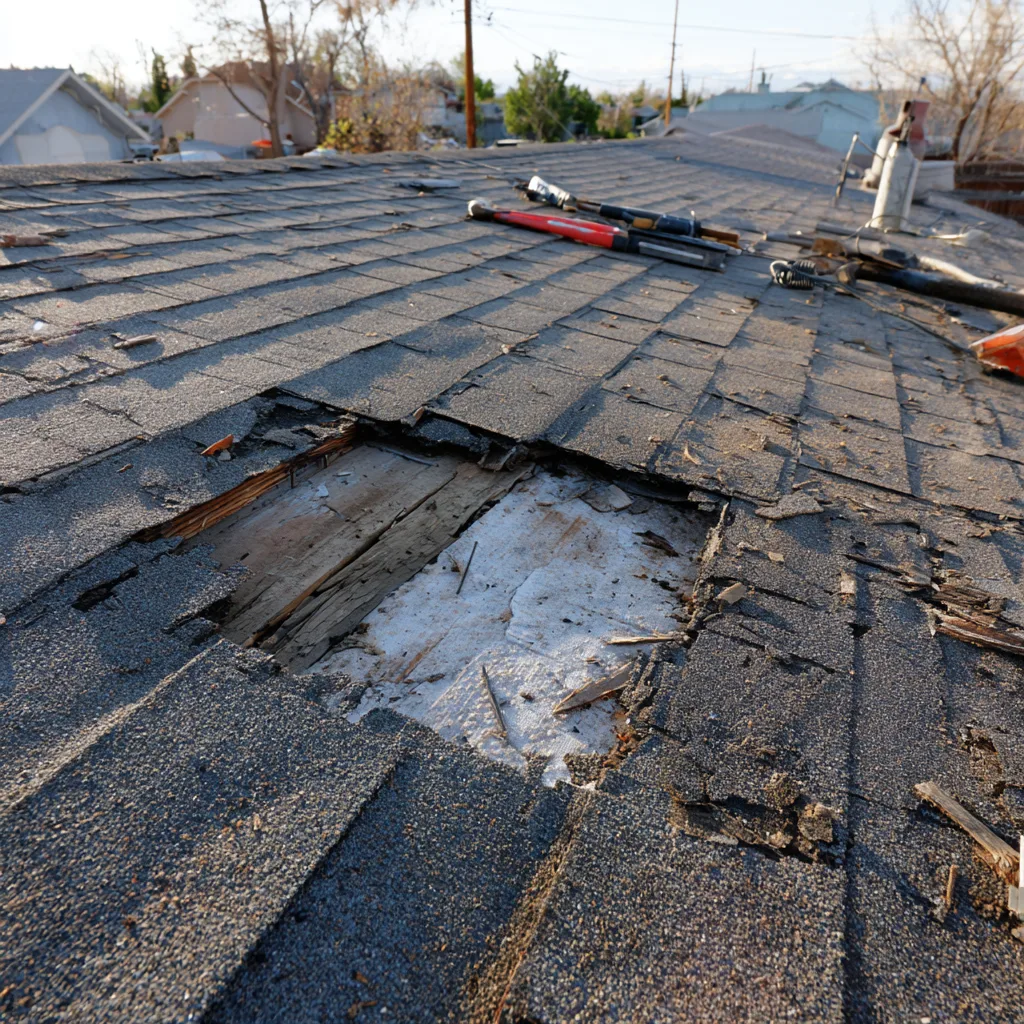
A split collar lets water track along the pipe. Replacing the boot and restoring the shingle overlaps addresses the penetration as a complete detail.
Step flashing carries runoff at each shingle course, while counterflashing protects the upper edge. Failed or missing layers need a rebuilt connection rather than a coat of surface sealant.
Valleys collect runoff from adjoining slopes. Debris, damaged material, incorrect laps, and punctures need to be assessed in that concentrated water path.
If water is actively entering, temporary protection can be part of the work while a permanent repair is arranged. It is not a substitute for fixing the failed roofing detail. Stay off a wet or damaged roof, move belongings only where it is safe, and keep clear of electrical hazards and sagging ceilings.
Opening a leak area can reveal deteriorated decking or shingles too brittle to lift. The repair boundary needs to reach material that can support the new work. Interior drying, insulation, electrical, or ceiling repairs can need separate qualified trades.
Tell us where the water appeared and the property location. Request a free roof inspection.
Call (816) 521-6944Yes. Wind can push rain into a joint that sheds an ordinary shower. That pattern helps direct the inspection, but it does not identify the failed detail on its own.
The source needs to be corrected and the affected materials assessed and dried before interior finishes are restored. Wet materials and electrical concerns require the right trade rather than a cosmetic cover.