
Attachment
Mechanically attached, adhered, and other assemblies have different substrate and design requirements. Wind performance depends on the specified assembly and its perimeter details, not membrane thickness alone.
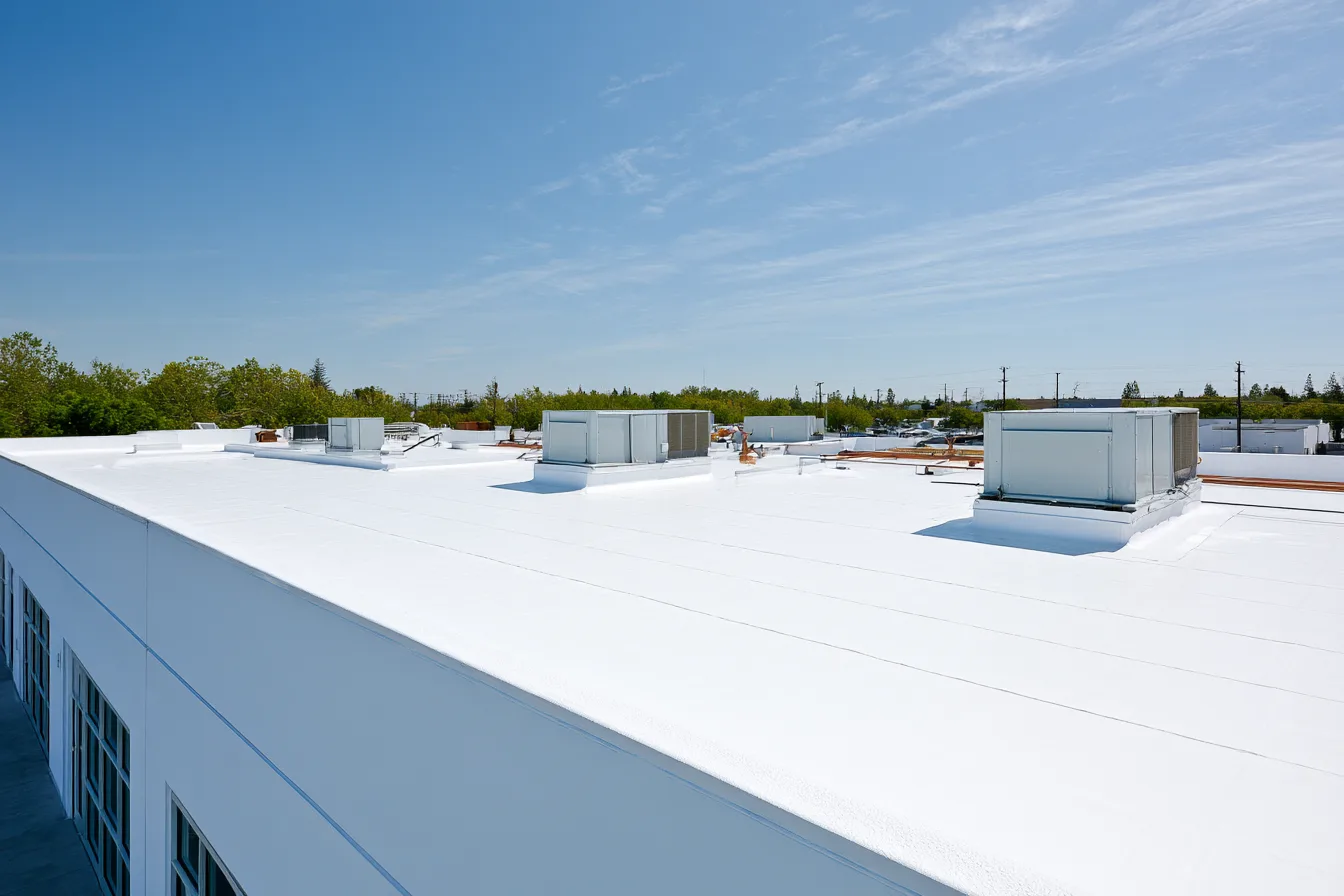
TPO is a thermoplastic single-ply membrane joined using heat-welded seams. Edges, drains, equipment curbs, and pipe penetrations still need formed or fabricated details compatible with the system. A white roof surface does not identify the material by itself.
Before repair, the existing membrane type and condition need to be established. Surface contamination, aging, and existing repairs affect preparation. A compatible welded repair and an unrelated adhesive patch are not interchangeable approaches.
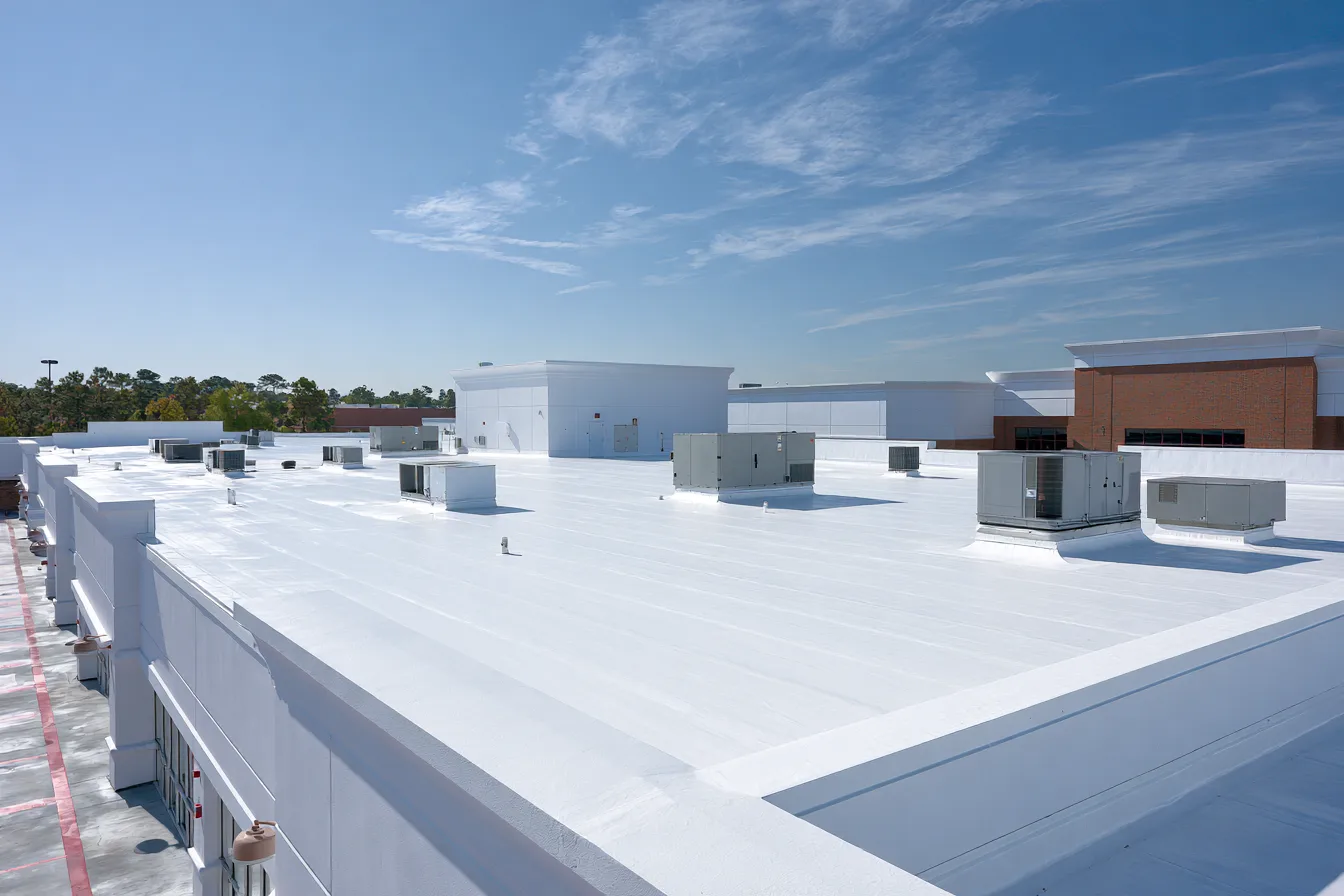
Mechanically attached, adhered, and other assemblies have different substrate and design requirements. Wind performance depends on the specified assembly and its perimeter details, not membrane thickness alone.
Insulation value, wet material removal, cover board, and tapered drainage need to be resolved together. Retaining saturated insulation beneath new membrane leaves moisture in the assembly.
Roof-mounted equipment, service routes, and walkway protection affect the detail layout. Rooftop maintenance needs should be considered without obstructing drainage paths.
Rubber membrane uses its own compatible seam and flashing methods. It is not repaired using a TPO welding assumption.
Multi-layer asphalt-based systems have different preparation, application, and detail requirements. An existing cap sheet calls for a system-specific assessment.
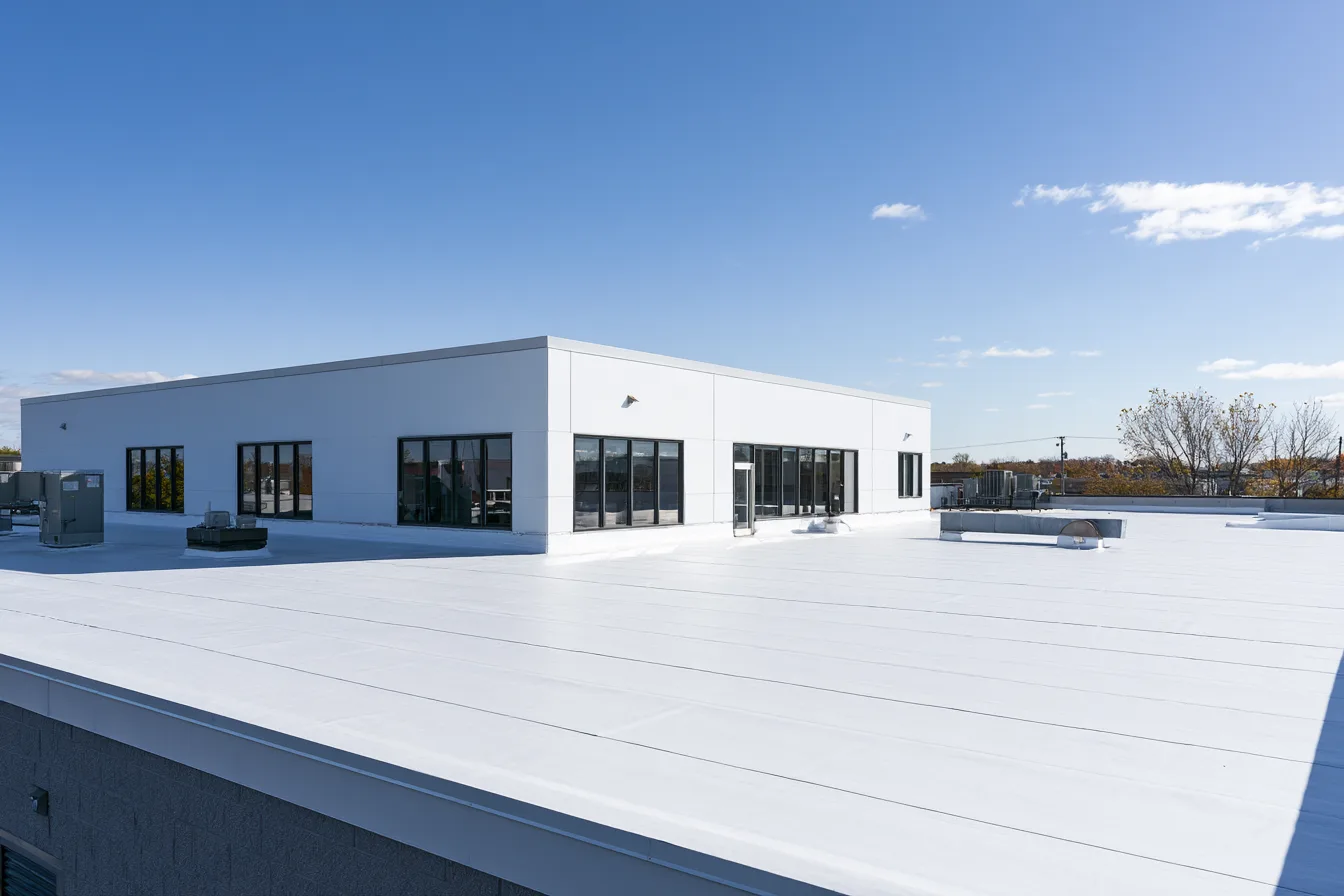
Share what you know about the membrane and the problem. A free inspection can establish the useful next step.
Call (816) 521-6944